So, you're thinking about setting up a business in Dubai. One of the first questions on your mind is probably: what’s the real cost?
Getting a straight answer can be tricky because the final price tag isn't just one single fee. The initial trade license Dubai cost can run anywhere from AED 18,000 to over AED 50,000 for the first year. It all boils down to the choices you make for your business—whether you go for a mainland or free zone setup, what your business actually does, and how many visas you'll need.
Think of it as putting together a puzzle. Each piece is a different cost, and how you assemble them determines the final picture of your investment.
Understanding the Initial Investment for Your Dubai Business
Starting a business here is an exciting journey, but it’s easy to get lost in the numbers. The path you choose right at the beginning—Mainland Company Formation versus Freezone Company Formation—is the biggest fork in the road and dramatically shapes your costs.
A mainland setup gives you the freedom to trade directly anywhere in the UAE market. On the other hand, free zones are hugely popular for their perks like 100% foreign ownership and tax exemptions. Each has a completely different cost structure.
Key Factors Influencing Your Total Cost
It’s not just one thing that decides your final bill. A few key variables work together to determine the price of your trade license.
- Business Jurisdiction: Are you setting up shop on the Dubai mainland or in one of the 40+ free zones? This is the most significant cost driver.
- Business Activities: What you plan to do—be it commercial trading, providing professional services, or industrial manufacturing—dictates the type of license and its associated government fees.
- Office Space: A physical or virtual address is non-negotiable. Your choice, from an affordable flexi-desk to a dedicated private office, will have a big impact on the budget.
- Visa Requirements: The more investor or employee visas you need, the higher the cost. Each visa comes with its own government fees for processing, medical tests, and Emirates ID.
Below is a quick table to give you a clearer idea of what to expect for both mainland and free zone setups.
Estimated Trade License Cost Breakdown
| Cost Component | Dubai Mainland (Estimated Range) | Dubai Free Zone (Estimated Range) | Key Considerations |
|---|---|---|---|
| Initial Approval & Name Reservation | AED 800 – AED 1,500 | Included in package or AED 500 – AED 2,000 | Mandatory first steps. Trade name fees vary based on uniqueness. |
| License Registration Fee | AED 10,000 – AED 40,000+ | AED 12,000 – AED 30,000+ | This is the core license cost, heavily dependent on your business activity. |
| Office/Premises (Annual) | AED 15,000+ (Virtual/Flexi) | Included in package or AED 5,000 – AED 25,000 (Flexi-desk) | Mainland often requires a physical lease (Ejari). Free zones offer flexible packages. |
| Investor/Partner Visa (per visa) | AED 4,500 – AED 6,500 | AED 4,000 – AED 7,000 | Includes entry permit, medical test, Emirates ID, and visa stamping. |
| Establishment Card | AED 600 – AED 2,000 | AED 1,500 – AED 2,500 | A required card for sponsoring visas. |
| Local Sponsor/Service Agent Fee | AED 5,000 – AED 15,000+ | N/A (100% ownership) | Only for mainland setups. A fixed annual fee paid to your UAE national partner. |
This table should give you a solid baseline, but remember these are estimates. The final figure depends entirely on the specifics of your business plan and the jurisdiction you choose.
Of course, getting your company off the ground is just the first step. As you plan your budget, it's also a good idea to research how to fund a startup to make sure you have the capital to cover these initial costs and fuel your growth.
This guide will walk you through every single component of the trade license Dubai cost, so you can build a realistic budget with no surprises.
Breaking Down Core Government and License Fees
When you're trying to figure out the total trade license Dubai cost, the government fees are the bedrock of your budget. These are the fixed, non-negotiable charges every single entrepreneur has to pay to get their company off the ground legally.
Think of it like building a house. Before you can even think about paint colours or furniture, you have to pay for the land, the permits, and the foundation. That's exactly what these government fees are for your business.
These payments go to different government bodies, mostly the Department of Economy and Tourism (DET) if you're setting up on the mainland, or to the specific free zone authority if you're going that route. Each fee has a clear purpose in the registration pipeline, taking your business from just an idea to a legally operating company. Knowing what each charge covers gives you a much clearer picture of where your initial investment is going.
Instead of staring at one big, intimidating invoice, it’s much easier to break these core charges down one by one. This clears up the confusion and helps you plan your budget with real precision.
The First Steps: Trade Name and Initial Approval
Before your business can get a license, it needs two things: a name and the official green light to move forward. These first steps have their own specific costs.
Your very first official expense will be the Trade Name Reservation. You’ll need to pick a unique name for your company that follows the UAE's naming rules. This fee, usually somewhere between AED 600 and AED 900, secures that name so nobody else can take it. The final cost can shift a bit depending on whether the name is in English or Arabic, or if it has any special words or personal names in it.
Right after that comes the Initial Approval Certificate. This is a key document from the DET, and it basically says the government has no issues with your proposed business activities or partners. It’s the official nod to continue with the rest of the licensing process, and this approval typically costs around AED 250. This step is important because it confirms your business idea is legally sound in the UAE before you put any more money in.
Key Takeaway: The Trade Name Reservation and Initial Approval are the first financial hurdles you'll clear. They might seem small compared to the main license fee, but they are absolutely essential steps that officially kick off your company formation journey.
The Main Event: License Issuance Fee
Once your name is secured and you've got initial approval, you’re at the biggest government expense: the License Issuance Fee. This is the core cost of your trade license and the payment that officially gives you the legal right to run your business in Dubai.
But this fee isn't just one flat number. It changes quite a bit based on a few things:
- Business Activity: What your business actually does—commercial, professional, or industrial—is a big factor. More specialised activities can often mean higher fees.
- Legal Structure: The cost for a Sole Proprietorship is going to be different from that of a Limited Liability Company (LLC).
- Jurisdiction: A mainland license is calculated differently than a free zone license.
For a really detailed look at how these factors play out for mainland companies, our guide on the Dubai mainland license cost breaks it all down. This single payment covers all the administrative work, getting your company into the official commercial registry, and the physical printing and issuance of your trade license certificate.
Additional Mandatory Government Payments
Beyond the main license fee, there are a couple of other government charges that get rolled into the total trade license Dubai cost. You’ll usually see these listed as separate items on your payment voucher from the DET.
One of these is the Dubai Chamber of Commerce Membership. If you have a mainland company, this membership is mandatory. The fee depends on your business activity and legal structure, adding another layer to your government costs.
Another key cost is the Market Fees, which are calculated as a percentage of your office's annual rent. This is paid to the Dubai Municipality and is a standard requirement for any mainland business with a physical office space. These extra costs make sure your business is properly plugged into Dubai's commercial ecosystem, giving you access to networking, support, and oversight from key government bodies.
Comparing Mainland and Free Zone Cost Structures
One of the first, and biggest, decisions you'll make when setting up your business in Dubai is choosing between a mainland or a free zone setup. This isn't just about your address; it's a choice that fundamentally shapes your total trade license Dubai cost, both at the start and for years to come.
Think of it like this: a mainland company is like owning a standalone villa. You have unrestricted access to the entire city and can do business anywhere. A free zone, on the other hand, is like living in a high-end gated community. It comes as an all-in-one package with its own set of rules, perks, and a clear annual fee, but your activities are generally restricted to that community and international clients.
Each option has a completely different financial model. A mainland license is your ticket to trade directly across the entire UAE market. However, it often requires a Local Service Agent (LSA) for professional licenses, which comes with an annual fee. Free zones flipped this model on its head, offering 100% foreign ownership and removing the need—and the cost—of a local partner.
Mainland Cost Dynamics
On the Dubai mainland, the cost breakdown is more itemised. You'll pay separate government fees for things like your trade name reservation, initial approval, and the final license issuance. But the big variables to watch out for are:
- Local Service Agent (LSA) or Sponsor Fees: For many professional and commercial activities, you’ll pay an annual fee to your Emirati partner, which can range anywhere from AED 5,000 to AED 15,000+. It’s a significant recurring expense that you only find with mainland setups.
- Office Rent and Ejari: Mainland companies must have a physical office lease registered through the Ejari system. This is a major annual cost that varies wildly depending on your chosen location and office size.
- Government Liaison (PRO Services): Dealing with various government bodies like the Department of Economy and Tourism (DET) requires time and expertise, which is why most businesses budget for professional PRO services.
This route gives you maximum freedom to operate, but it means you're juggling multiple cost components and stakeholders.
Free Zone Packaged Pricing
Free zones simplify things with a package-based model. When you sign up, you’re usually buying a bundle that includes several key costs rolled into one predictable annual fee.
A huge plus for free zones is their cost transparency. Most will offer you a bundled package covering the license, a flexi-desk or office space, and even a set number of visas, all for a single, upfront price.
But not all free zones are created equal. Premium zones like DMCC and DIFC offer prestigious addresses and world-class infrastructure, with packages that can easily top AED 50,000. On the other end, you have very budget-friendly options in other emirates, like Ajman Free Zone or RAK ICC, where packages can start as low as AED 18,000, offering a cost-effective way to get your foot in the UAE market.
Here's a quick visual of the core steps and fees involved in the Dubai trade license process.
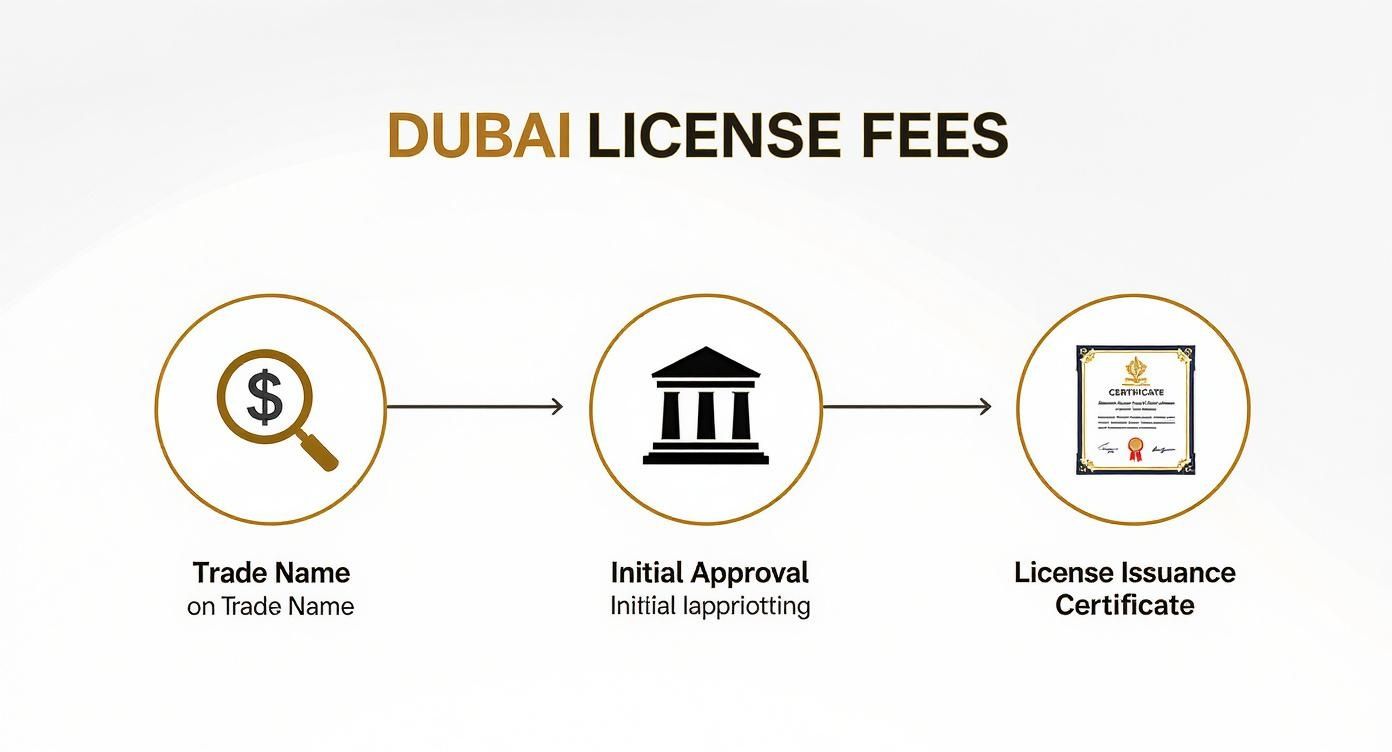
As you can see, whether you go for mainland or free zone, the initial steps of reserving a trade name and getting initial approval are universal before the main license is issued.
To help you weigh the options, here’s a direct financial comparison:
Dubai Mainland vs Free Zone Financial Analysis
| Cost Factor | Dubai Mainland | Popular Dubai Free Zone | Key Considerations |
|---|---|---|---|
| Initial License Fee | Variable, paid to DET | Often bundled in a package | Mainland fees are itemised. Free zone packages offer predictability. |
| Local Partner/Agent Fee | AED 5,000 – AED 15,000+ annually | Not applicable (100% foreign ownership) | This is a major recurring cost exclusive to mainland that free zones eliminate entirely. |
| Office Space | Mandatory physical office with Ejari (can be significant) | Flexi-desk options included in basic packages, physical offices available at extra cost. | Free zones offer a much lower entry barrier for office space, ideal for startups. |
| Visa Eligibility | Tied to office size (approx. 1 visa per 80 sq. ft.) | Pre-allocated based on package (e.g., 0-6 visas) | Free zone packages make visa planning straightforward. Mainland visa quotas depend on how much space you rent. |
| Market Access | Unrestricted access to the entire UAE market | Direct trade limited to within the free zone and internationally (local distributor needed for mainland sales) | If your main customer base is inside the UAE, mainland is often the only practical choice, despite the higher setup costs. |
So, what’s the right call? It really boils down to your business model. If you need to trade directly with customers across the UAE, the mainland is your best bet. But if your work is international, or you're a consultant or tech startup looking for a simple, tax-efficient structure, a free zone is almost certainly the more cost-effective path.
For a deeper dive, check out our guide on the Dubai free zone company setup cost. Our specialists are here to walk you through the long-term financial implications to make sure your choice perfectly matches your budget and business goals.
Factoring in Office Space and Ejari Registration
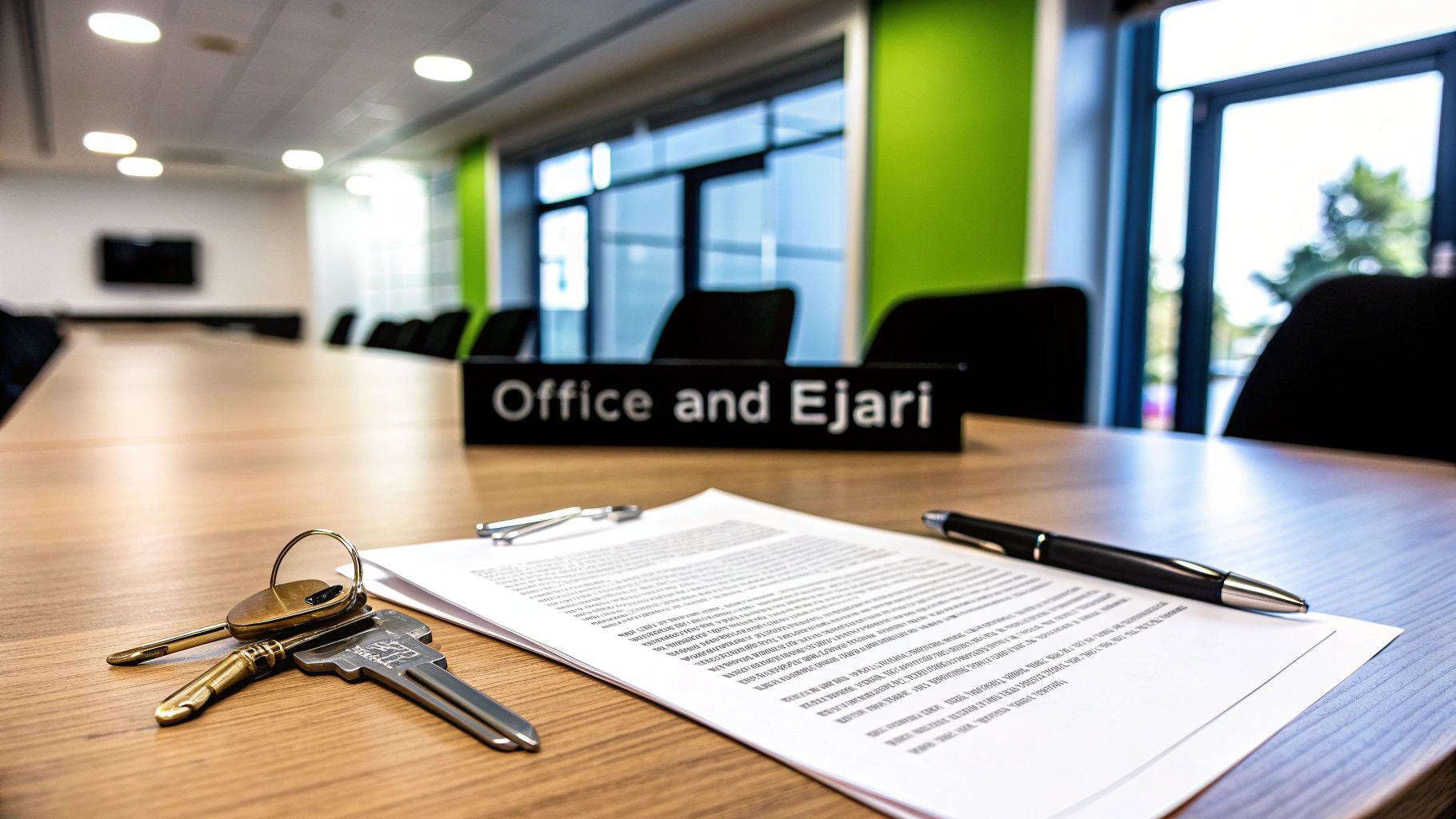
When you’re setting up a business in Dubai, your trade license and your physical address are completely linked. This isn't just a good idea—it’s a hard rule, making your office choice a big part of the total trade license Dubai cost.
Whether you go for a mainland company or set up in a free zone, you absolutely must have a registered physical address. It’s how the government ensures every business is legitimate, traceable, and playing by the rules.
So, think of your office as more than just a place to work. It’s a legal cornerstone of your company that directly shapes your setup costs and what you’ll pay year after year.
Mainland Offices and the Ejari System
For anyone setting up on the mainland, the path is straightforward: you need to rent a physical office and get a tenancy contract. That contract then has to be registered with the Real Estate Regulatory Agency (RERA) through a system called Ejari, which literally means "my rent" in Arabic.
Ejari is the official online portal that legally validates your lease. You can't get your mainland trade license without an Ejari certificate; it's one of the final, crucial steps.
The costs here break down into two main parts:
- Annual Office Rent: This will be your biggest outlay and can vary wildly depending on the location, size, and quality of the building. Even a modest office in a business centre can run you AED 30,000 to AED 70,000 a year.
- Ejari Registration Fee: This is a one-off administrative fee to get your contract registered. It’s typically around AED 220.
This makes signing an office lease a major financial decision and a non-negotiable step for forming a mainland company.
Free Zone Office Solutions
Free zones, on the other hand, are known for their flexibility—a major draw for startups and international entrepreneurs. Instead of forcing you into a traditional office lease, most free zones bundle more affordable options right into their license packages.
These solutions are designed to meet the legal address requirement without the hefty price tag of a dedicated office. The most popular choices include:
- Flexi-desks: This gives you a legitimate business address and lets you use a shared desk for a certain number of hours each month.
- Virtual Offices: Essentially, this is an official address and mail-handling service. It’s a perfect fit for businesses that don’t need a physical workspace. Our guide explains more about the benefits of virtual offices in Dubai.
- Dedicated Offices: If you do need a permanent base, free zones also provide fully serviced private offices in all sorts of sizes.
A flexi-desk setup in a free zone typically costs between AED 6,000 and AED 12,000 annually. Private offices might go up to AED 40,000 per year. These costs are a strategic part of your business plan, not just an operational expense. If you're planning a more substantial setup, this ultimate guide to office relocation can be an invaluable resource for navigating the move.
Budgeting for Visas and PRO Service Fees
Getting your trade license is a huge milestone, but it’s not the end of the road when it comes to your setup costs. To actually live and work in the UAE legally, you’ll need to budget for visas and the administrative legwork required to get them.
Think of it this way: your trade license is the key to your business, but the visas are the fuel. Without residency permits for yourself as the owner, and eventually for your staff, your business can’t really go anywhere. These aren't optional extras; they are a fundamental part of your first-year investment, and overlooking them can lead to some nasty surprises and long delays.
The All-Important Establishment Card
Before you can sponsor anyone for a visa—including yourself—your company needs an Establishment Card. It’s a small document, but it’s mighty. This card officially registers your business with the immigration authorities (GDRFA) and the Ministry of Human Resources and Emiratisation (MOHRE).
Without it, your company simply doesn't exist in the eyes of the immigration system. You can’t hire anyone or even apply for your own investor residency. The fee for the card usually lands somewhere between AED 600 and AED 2,500, depending on where you’ve set up. It’s a one-off cost that unlocks the door to building your team.
Calculating Investor and Employee Visa Costs
Once your Establishment Card is issued, you can kick off the visa process. The first one you'll likely apply for is your own investor visa, which solidifies your residency status as the business owner. Later on, as you hire people, you’ll follow a similar process for each employee.
A typical investor visa package will set you back between AED 4,000 and AED 7,000. That figure isn’t just a single charge; it’s a collection of fees for several mandatory steps:
- Entry Permit/Employment Offer Letter: This is the first piece of paper that allows a person to enter the UAE for residency or work.
- Medical Fitness Test: A standard health check-up, including blood tests and a chest X-ray, is required for all residents.
- Emirates ID Application: This covers the processing fee for the mandatory national identity card.
- Visa Stamping: The final step where the residency permit sticker is officially placed inside your passport.
Each stage comes with its own government fee, so the total cost will naturally scale up as your team grows. Getting this part of your budget right is absolutely critical for managing your startup funds.
The Value of Professional PRO Services
Trying to handle all the paperwork for your license, Establishment Card, and visas on your own can be a real headache. You’re dealing with multiple government departments, documents that need to be in Arabic, and rules that can change without much notice. A single mistake can lead to rejected applications and weeks of delays.
This is where Corporate PRO Services become a lifesaver. A professional PRO (Public Relations Officer) is your company’s official go-between for all government tasks. Their entire job is to make sure every form is filled out correctly and submitted on time, preventing delays that could otherwise bring your business to a halt.
Expert Insight: Don't think of hiring a firm for your Golden Visas, Investor Visas, and Corporate PRO Services as an expense. It's an investment in getting your business set up smoothly, correctly, and without costly setbacks.
Working with a professional firm removes that administrative burden, letting you get back to what you do best: launching your business. Their knowledge saves you time, money, and a lot of stress in the long run. At PRO Deskk, our cost-effective business setup solutions and 24/7 support are built to give you exactly that kind of confidence.
Actionable Tips to Lower Your License Costs
Knowing what goes into your trade license Dubai cost is one thing, but actively controlling those costs is where the real magic happens. With a bit of strategic thinking, you can bring down your initial and ongoing expenses quite a bit, without cutting corners or limiting your business's potential.
Making smart financial moves right from the start can literally save you thousands of dirhams. This isn't about being cheap; it's about being informed. Every decision, from your business activities to your office space, has a price tag attached.
Strategically Select Your Business Activities
The specific activities you list on your trade license have a direct impact on the final bill. Certain specialised activities need extra approvals from different ministries or government departments, and each of those approvals comes with its own fee.
To keep your budget in check, have a close look at the official list of activities. Start with only the absolute essentials you need to get your business off the ground. You can always amend your license and add more activities later on as your company grows and you open up new revenue streams. It's a phased approach that keeps your initial investment lean and focused.
Choose the Right Jurisdiction and Office Type
Your choice between a mainland and a free zone setup is one of the biggest factors affecting your costs. Even deciding which free zone to go with can make a huge difference. While a mainland license gives you total freedom to trade across the UAE, some free zones offer fantastic value, especially for startups and international businesses.
Here are a couple of ways to save:
- Explore Budget-Friendly Free Zones: Premium Dubai free zones have their advantages, but jurisdictions in Sharjah, Ajman, or Abu Dhabi often have much more competitive packages for similar business activities. Our team can walk you through the Freezone Company Formation process across the UAE to find the perfect fit for your wallet.
- Start with a Flexi-Desk: Unless you absolutely need a physical office from day one, choosing a flexi-desk or virtual office package is one of the smartest ways to slash your upfront costs. It fulfils the legal requirement for a business address at a tiny fraction of what a traditional lease would cost.
Bundle Services with a Trusted Partner
Trying to manage your license, visas, and PRO services with different providers can get messy and expensive fast. Working with a single, reliable partner to handle everything is a much smarter move.
Bundling services like your license, visas, and ongoing Corporate PRO Services doesn't just make the whole process smoother—it also unlocks some serious cost savings. A single expert partner can put together a package deal that’s much more affordable than paying for each service separately.
At PRO Deskk, our entire focus is on creating cost-effective business setup solutions that are built around what you actually need. This allows international entrepreneurs to really take advantage of the UAE's incredible tax benefits. Our team manages everything from getting the initial approvals to processing your visas, making sure your launch is as affordable and seamless as possible. You benefit from our expertise and our strong relationships with government bodies, which saves you both time and money. Plus, our 24/7 support means we're always here to help you make the right financial decisions.
Frequently Asked Questions
When you're figuring out the finances for setting up a business in Dubai, a few key questions always pop up. Here are some clear, direct answers to help you lock in your budget and get started, making sure there are no grey areas around the trade license Dubai cost.
Can I Get a Dubai Trade License Without an Office?
Almost every trade license requires a registered address, making it a fundamental part of your setup expenses. If you're setting up on the mainland, an Ejari-registered tenancy contract is something you absolutely must have.
Free zones can be a bit more flexible. Many offer flexi-desk or virtual office packages that can act as your official business address. While there are a few exceptions for certain freelance permits, a standard trade license is almost always tied to a physical location.
What Is the Cheapest Trade License in the UAE?
Finding the "cheapest" license really boils down to what you need, like how many visas you require and what your business actually does. Generally speaking, free zones in the northern emirates, such as Ajman (AFZA) or Ras Al Khaimah (RAKEZ), are known for their very competitive pricing.
But it’s important to look beyond just the price tag. You have to make sure the free zone’s location and rules fit with where you want your business to be in the long run. Choosing based on cost alone can box you in with operational challenges down the road.
Are There Any Hidden Costs I Should Know About?
Yes, new entrepreneurs often get caught off guard by a few costs that aren't included in the main license fee. These can include things like fees for getting documents attested and legally translated, initial deposits needed to open a corporate bank account, and the full annual renewal fees for your license, office space, and establishment card.
The best way to sidestep any surprises is by working with a transparent business setup consultant. A good advisor will map out every single potential cost right from the start, making sure your budget is solid and realistic. This kind of proactive planning keeps unexpected bills from derailing your launch.
How Much Does It Cost to Renew a Trade License?
Your annual renewal is a major recurring cost, but the good news is that it's usually less than what you paid for the initial setup. The renewal fee typically bundles the license itself, your office rent, the establishment card renewal, and any local service agent fees if you're on the mainland.
As a rule of thumb, you can plan for the yearly renewal to be around 80-90% of your first year's core government and license fees. This estimate doesn't include one-time costs from your first year, like initial approvals or visa stamping. Factoring this recurring expense into your budget is key to smart, long-term financial planning.
At PRO Deskk, we specialize in making your business setup journey smooth, transparent, and affordable. Our expertise covers every detail, ensuring you get the best value and support. Here's how we help:
✅ Specialists in Mainland Company Formation in Dubai, Sharjah & Abu Dhabi
✅ Specialists in Freezone Company Formation across the UAE
✅ Specialists in Golden Visa on Property and Investor Visa
✅ Specialists in Corporate PRO Services and Attestation Services
✅ 24/7 Support Service – Always here when you need us
✅ Cost-Effective Business Setup Solutions tailored to your needs
✅ Enjoy UAE Tax Benefits for International Entrepreneurs
📞 Call Us Now: +971-54-4710034
💬 WhatsApp Us Today for a Free Consultation